Listen on YouTube Music > https://www.youtube.com/watch?v=Oh-cV7m8LTI
But for the Grace of God
In the winter rain of Limerick, with the hunger at my door
I fired a shot in desperation and was taken to the floor
My mother begged for mercy with a hand that could not write
But for the grace of God, I lived beyond that night
Twelve months lost upon the water, twelve months fearing what’s to come
Till the sunlight broke on Spring Bay and warmed a convict’s bones
And the day they finally freed me, I felt my spirit rise
But for the grace of God, I found love in Ellen’s eyes
On the Vicary land in Triabunna, where the southern winds ran wild
I found an Irish heartbeat in a maid with a gentle smile
We wed in Richmond’s chapel, old stones and holy light
And I felt the Lord restore me in the sacrament that night
Then the years rolled soft before us and our children filled the air
Michael first, then little Margaret, and the twins with matching stare
And when young Ellen joined us in the spring of sixty-four
But for the grace of God, I’d have never asked for more
Twelve months lost upon the water, twelve months fearing what’s to come
Till the sunlight broke on Spring Bay and warmed a convict’s bones
And the day they finally freed me, I felt my spirit rise
But for the grace of God, I found love in Ellen’s eyes
And when my eldest took to Rheban, six thousand acres wide and grand
I saw a strength within him that could tame the hardest land
He rode the hills with purpose, with a fire I’d never known
And I thanked the Lord in silence for the greatness in my son
Though I’d not live to see it, I could feel the future rise
In the way he walked the paddocks with a vision in his eyes
And I knew the Lord had lifted what the famine once had done
But for the grace of God, a legacy had begun
Twelve months lost upon the water, twelve months fearing what’s to come
Till the sunlight broke on Spring Bay and warmed a convict’s bones
And the day they finally freed me, I felt my spirit rise
But for the grace of God, I lived long enough to see that pride
STORY BOARD
SONG OVERVIEW
Written and produced by Tasmanian Songwriter Jason Bresnehan, But for the Grace of God is an Irish folk ballad that tells the true story of John Bresnehan, a young Irishman transported to Van Diemen's Land during the Irish Famine after firing a shot at an English tax collector in an act of desperation. What begins as a story of hunger, punishment and exile gradually becomes a story of faith, family and legacy. The song follows John's journey from Limerick to Tasmania, where he finds freedom, marries Ellen, raises a family and ultimately witnesses the foundations of a future he could never have imagined.
MUSICAL DIRECTION
Built around acoustic guitar, fiddle, bodhrán, whistle and gentle folk percussion, the arrangement draws heavily from traditional Irish storytelling ballads. The verses should feel reflective and conversational, allowing the narrative to unfold naturally, while the chorus provides an emotional lift that reinforces the song's central theme of gratitude and providence. The vocal delivery should prioritise storytelling and sincerity, giving the listener the impression of sitting beside an old Irishman recounting the major chapters of his life.
THE ARTWORK
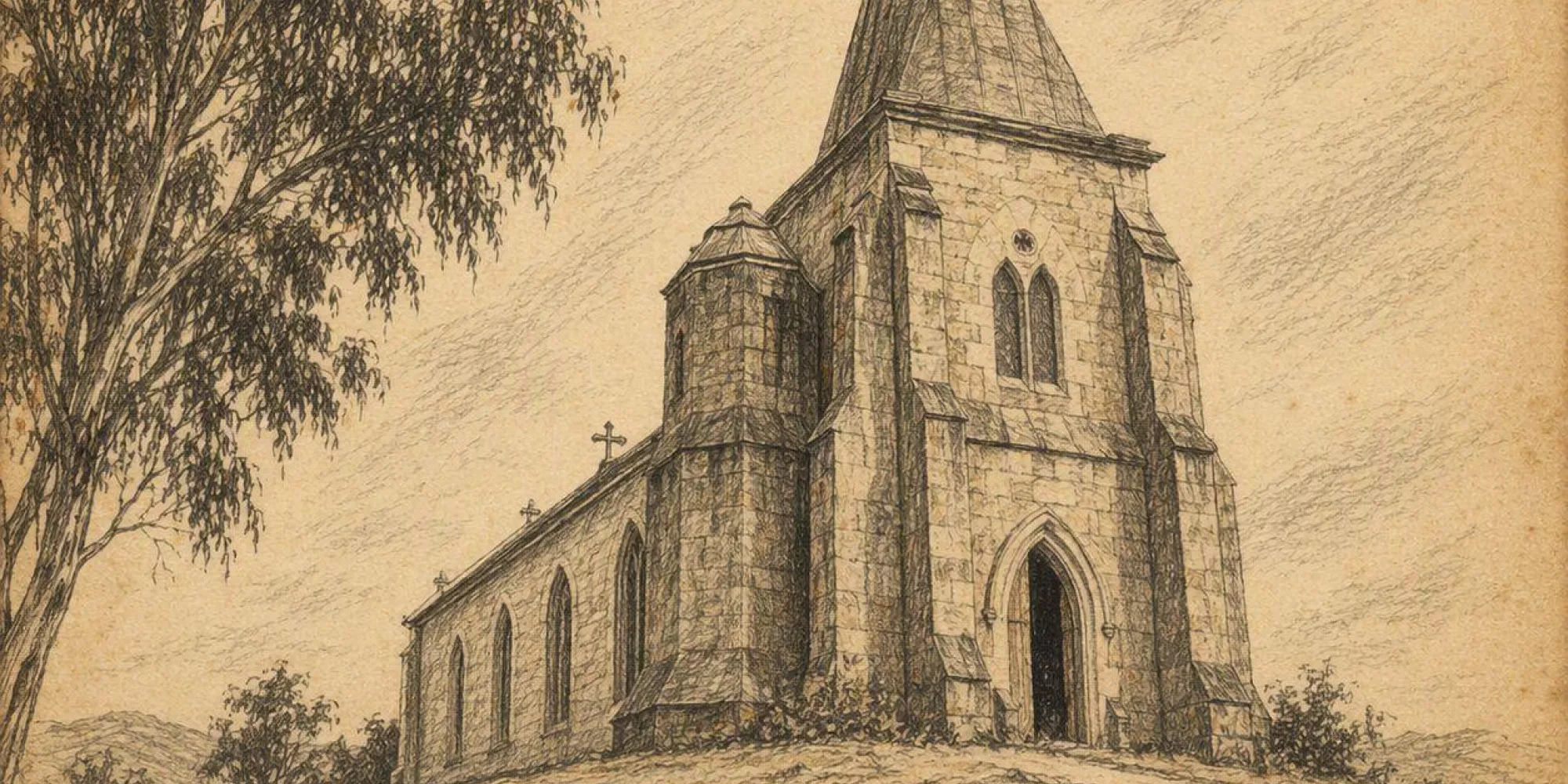
The artwork depicts St John's Catholic Church, Richmond, rendered as an aged historical sketch on parchment. The church marks one of the most significant moments in the song's story, the marriage of John Bresnehan and Ellen following John's transportation to Tasmania. The historic stone building serves as both a visual connection to a real family event and a symbol of restoration, faith and new beginnings. The aged style reinforces the passage of time and the enduring nature of family legacy.
PERSONAL CONNECTION TO JASON BRESNEHAN SONGWRITER AND PRODUCER
But for the Grace of God tells the true story of Jason Bresnehan's great-great-great-great grandfather, John Bresnehan. The song emerged from Jason's interest in understanding the people whose decisions and sacrifices ultimately shaped his own family's story.
Particularly significant is John's eldest son, Michael Bresnehan, who went on to acquire Rheban, one of Tasmania's most significant pastoral properties. Jason has often been fascinated by Michael's achievement. The son of a transported convict purchasing a substantial Tasmanian estate represented an extraordinary leap across a single generation. That determination, vision and willingness to build something larger than oneself are qualities Jason recognises throughout the Bresnehan family story.
At its heart, the song is a tribute to John and Ellen Bresnehan. It honours their perseverance, their faith and the family they created in Tasmania. The title captures the central theme of the story: that at several points the outcome could easily have been very different. Instead, through hardship, endurance and providence, a legacy was created that continues through the generations today.