
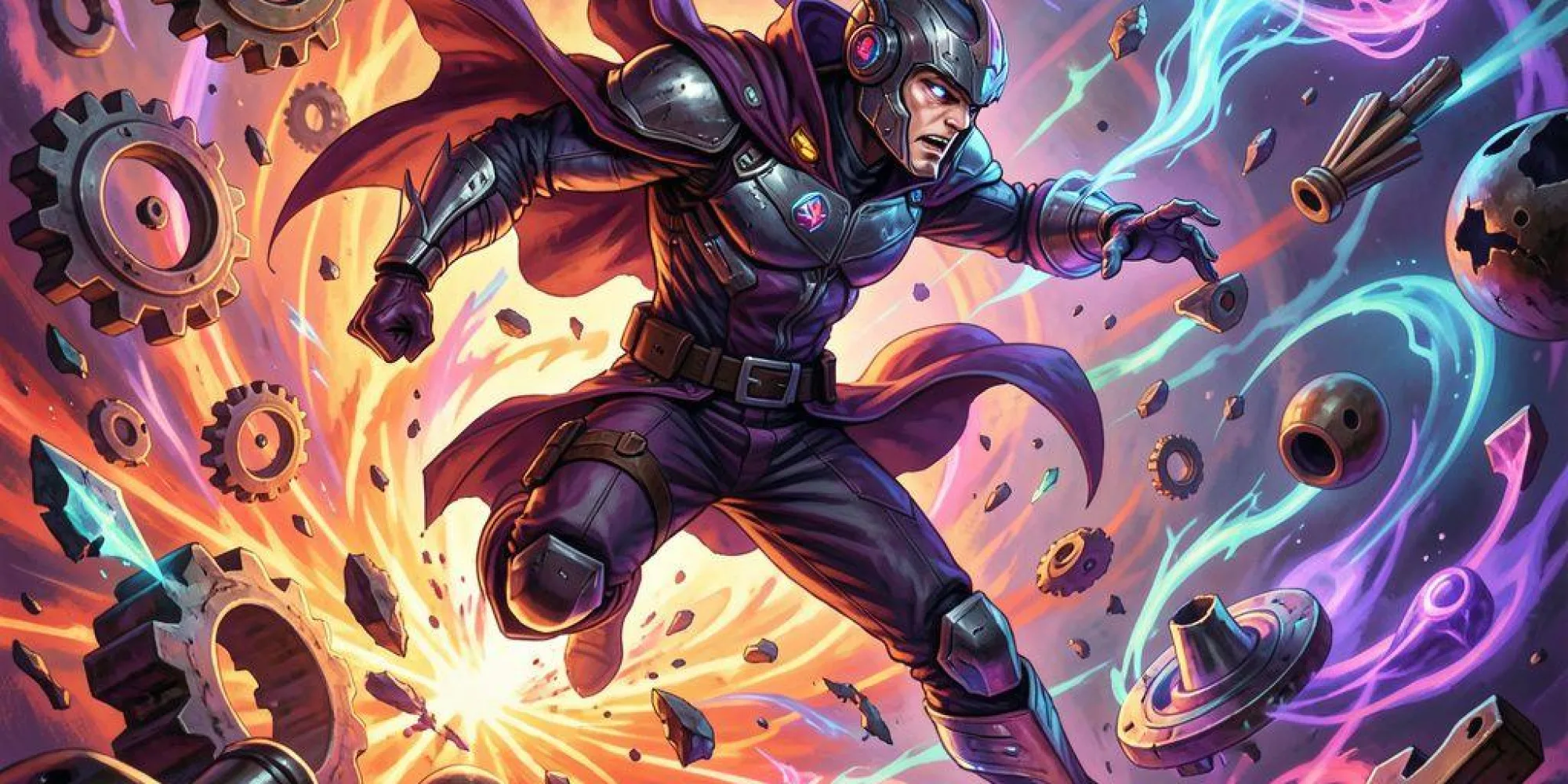
CHAOS NAVIGATOR
OPERATES CLEANLY WHEN THE ENVIRONMENT DESTABILISES
The Chaos Navigator is the person who remains functional when the environment becomes unstable. Most people lose coherence when systems break, when information conflicts, when priorities shift, or when pressure rises. They become reactive, emotional, or paralysed. They cling to familiar patterns even when those patterns no longer apply. The Chaos Navigator does the opposite. They stay calm, structured, and operational. They can think clearly in conditions that overwhelm others. They do not fear chaos; they read it.
This mode is essential because modern operating environments are defined by volatility. Markets move suddenly, technologies evolve unpredictably, teams reorganise, systems fail and information contradicts itself. AI introduces new variables faster than organisations can absorb them. In this landscape, the person who can navigate chaos becomes the person who can lead. They do not wait for stability; they create stability through their presence, their reasoning, and their ability to impose structure on disorder.
The Chaos Navigator understands that chaos is not randomness. Chaos is unstructured information. It is signal without pattern and movement without direction. The Chaos Navigator can see the underlying forces shaping the chaos and identify the real drivers of instability. They can distinguish between noise and threat, between urgency and importance, between motion and progress. This instinct pairs naturally with the Dot Connector, because navigating chaos requires the ability to see structure inside disorder. The Dot Connector sees the pattern; the Chaos Navigator uses it.
Chaos Navigators are often the first to act when others freeze. They understand that chaos rewards momentum, and that waiting for perfect clarity is a form of surrender. They move early, not recklessly but deliberately, to take the first step that reduces uncertainty, and they stabilise systems by engaging with them. This instinct connects directly to operational confidence, because confidence is what allows a person to act without perfect information. Chaos Navigators do not need certainty. They need direction.
Chaos Navigators are also natural absorbers of pressure. When the environment becomes volatile, they do not transmit their stress to others. Instead, they contain it and create psychological safety by remaining composed. They reduce the emotional temperature of the room. They speak plainly and define the next action. People trust Chaos Navigators because they do not escalate the chaos. They metabolise it. This is why Chaos Navigators often become informal leaders during crises – leadership gravitates toward the person who is not overwhelmed.
This mode connects directly to the Identity Shifter. Navigating chaos often requires shifting roles rapidly. One moment an operator must diagnose, the next they must communicate, then coordinate, then decide, then execute. People with rigid identities struggle in these conditions. They cling to their lane. They wait for someone else to take responsibility. The Identity Shifter steps into whatever role the moment requires. They do not protect their identity. They protect the system.
The Chaos Navigator understands that chaos reveals truth. When systems are stable, people can hide behind process, hierarchy, and routine, but when systems break, the underlying reality becomes visible. Weaknesses surface, assumptions collapse, and priorities become clear. The Chaos Navigator uses these moments to diagnose the system. They treat chaos as data. They understand that instability exposes what the organisation has been avoiding. They do not fear this exposure; they use it.
The Chaos Navigator is essential because the future belongs to those who can operate in motion. Stability is no longer the default state. Change is constant. Disruption is normal. Complexity is unavoidable. In this environment, a person who can navigate chaos becomes the person who can orchestrate systems, lead teams, and design solutions that work in the real world. The Chaos Navigator is not simply someone who stays calm under pressure, but someone who can create order without needing the world to be orderly.
On Amazon, you can purchase my books:
The AI Orchestration Engineer — Jason Bresnehan
A Catholic Gospel Journey Through the Lens of Alcohol Recovery — Jason Bresnehan