
Listen> https://youtu.be/3CGaajWJVR4?si=vUwu9bBkZlyagI5R
He Rose Again
He chased the call of battle battle from his youth,
a soldier sworn to courage, grit and truth,
his heart set firm on honour’s rising flame,
and sought his glory on the fields of fame.
A soldier with grit, courage and honour,
he forged his strength where quiet trials run,
he rose again when this new battle was won,
exalting schools across the whole wide world,
his Jesuit mission from God had begun.
Broken limbs brought stillness to his days,
in that quiet he learned deeper ways,
he forged his strength where silent trials were spun,
and found a fire no sword had ever won.
A soldier with grit, courage and honour,
he forged his strength where quiet trials run,
he rose again when this new battle was won,
exalting schools across the whole wide world,
his Jesuit mission from God had begun.
He gathered brothers marching toward the light,
steadfast devotion shaping faith with might,
he set in motion works that reached the world,
and raised the banner of the Jesuits unfurled.
A soldier with grit, courage and honour,
he forged his strength where quiet trials run,
he rose again when this new battle was won,
exalting schools across the whole wide world,
his Jesuit mission from God had begun.
A soldier who chased honour on the field,
a man remade where quiet trials revealed,
a founder whose brothers shaped a rising world,
and all of it born from the grit his spirit held.
A soldier with grit, courage and honour,
he forged his strength where quiet trials run,
he rose again when this new battle was won,
exalting schools across the whole wide world,
his Jesuit mission from God had begun.
STORY BOARD
SONG OVERVIEW
Written and produced by Tasmanian Songwriter Jason Bresnehan, He Rose Again is a piano-driven, fiddle-infused ballad inspired by the life of Saint Ignatius of Loyola. Blending country-adjacent storytelling with adult contemporary sensibilities, the song explores one of the most significant themes found throughout the Saints and Sinners project: the idea that life's greatest setbacks can become the doorway to a completely new mission.
The song follows Ignatius from youthful military ambition through catastrophic injury and ultimately into the founding of the Jesuit order. While rooted in a sixteenth-century saint's life, the song speaks directly to modern audiences confronting injury, addiction, recovery, grief, illness or any experience that forces a person to rebuild their life from the ground up.
At its heart, this is not a song about defeat. It is a song about resurrection through purpose.
THE TURNING POINT
Most saints are remembered for the thing they built. Ignatius is remembered because the thing he built only became possible after the life he planned fell apart.
As a young man, Ignatius sought honour, achievement and military success. A devastating battlefield injury left him bedridden and stripped away the future he had imagined for himself. What appeared to be the end of his story became the beginning of a new one.
The repeated line:
"He rose again when this new battle was won"
captures the central movement of Ignatius' life. The real battle was no longer fought against armies. It was fought within himself. His victory was not military success but the discovery of a deeper purpose.
GRIT, GRACE AND RECOVERY
While the song is written for Saint Ignatius, its message extends far beyond sixteenth-century Spain.
Throughout recovery communities around the world there are countless people who have experienced a similar turning point. Illness, injury, addiction, loss or personal failure often becomes the unexpected catalyst for transformation. The life a person planned may disappear, only to reveal a different calling waiting underneath.
The journey from brokenness to renewed purpose is one of the most universal human stories. Ignatius' life provides a powerful historical example of this pattern. His suffering did not destroy him. It redirected him.
The title He Rose Again therefore carries multiple meanings. It speaks of Ignatius' recovery from injury, his spiritual rebirth and the capacity of every person to begin again after life's hardest challenges.
MUSICAL DIRECTION
He Rose Again sits comfortably between country balladry and adult contemporary Christian music. Piano provides the emotional foundation, carrying the narrative with warmth and sincerity. The violin is deliberately played more like a traditional fiddle than a classical orchestral instrument, introducing a grounded, earthy quality that reflects the song's themes of hardship and resilience.
The arrangement avoids grandiosity. Instead, it builds gradually through the verses, allowing the story to unfold naturally before expanding during the chorus. The backing vocals entering later in the song create a sense of community and support, reinforcing the idea that transformation often occurs through relationships, faith and shared experience.
The overall effect is respectful, uplifting and deeply human. Rather than focusing on triumph, the music celebrates perseverance.
THE ARTWORK
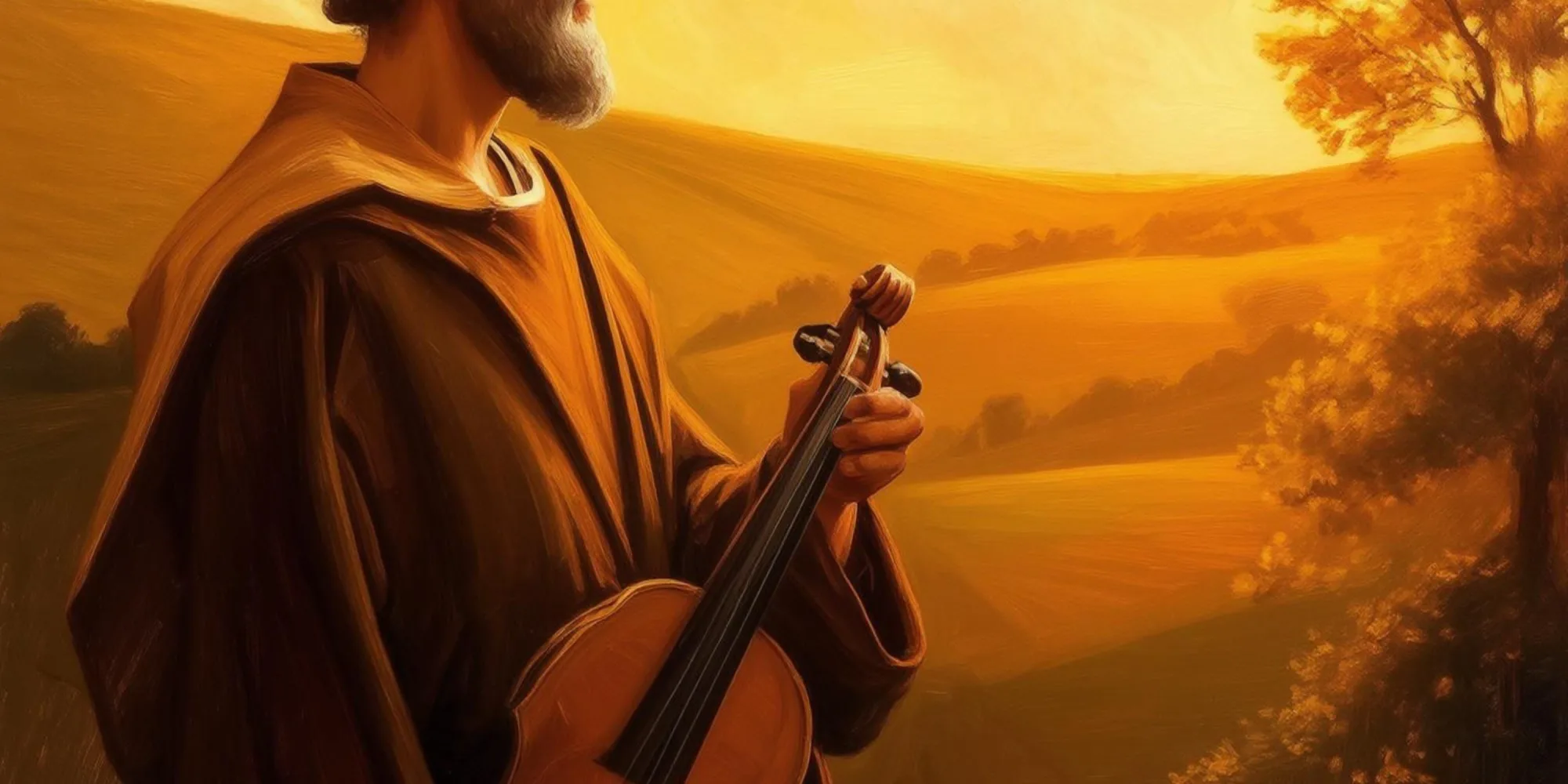
The artwork depicts Ignatius standing beneath a golden sky holding a violin while gazing into the distance. The image deliberately avoids battle scenes, military symbolism or moments of conflict. Instead, it portrays a man who has already passed through suffering and reached a place of reflection and purpose.
The warm landscape suggests both journey and destination. The violin symbolises creativity, expression and the transformation of pain into something meaningful. The golden light surrounding the figure represents hope emerging after darkness and the discovery of a mission greater than personal ambition.
The image captures the central message of the song: it is possible to rise again.
PERSONAL CONNECTION TO JASON BRESNEHAN SONGWRITER AND PRODUCER
While He Rose Again forms part of the Saint Ignatius chapter of Saints and Sinners, the song also carries a deeply personal dedication.
It is dedicated to Ken, an Australian military veteran who has fought many battles throughout his life and continues to confront the challenges of alcohol addiction. The story of Ignatius resonated strongly because both journeys contain a similar pattern. A life altered by hardship, a struggle that continues beyond the original wound and the enduring possibility of renewal.
The song does not pretend that recovery is easy or that every battle ends neatly. Instead, it expresses a conviction that a person's mission is not necessarily finished simply because they have been knocked down. Ignatius discovered a new calling after suffering what many would have viewed as defeat.
The dedication to Ken reflects the same hope.
The hero lyric:
"He rose again when this new battle was won"
becomes both a description of Ignatius and a prayer for every person still fighting their own battle. The song ultimately argues that God is not finished with people when they fall. Sometimes the most important mission begins after the original dream has been broken.
He Rose Again is therefore a song about resilience, redemption and the belief that every person can rise again when the time comes to answer a new call.