
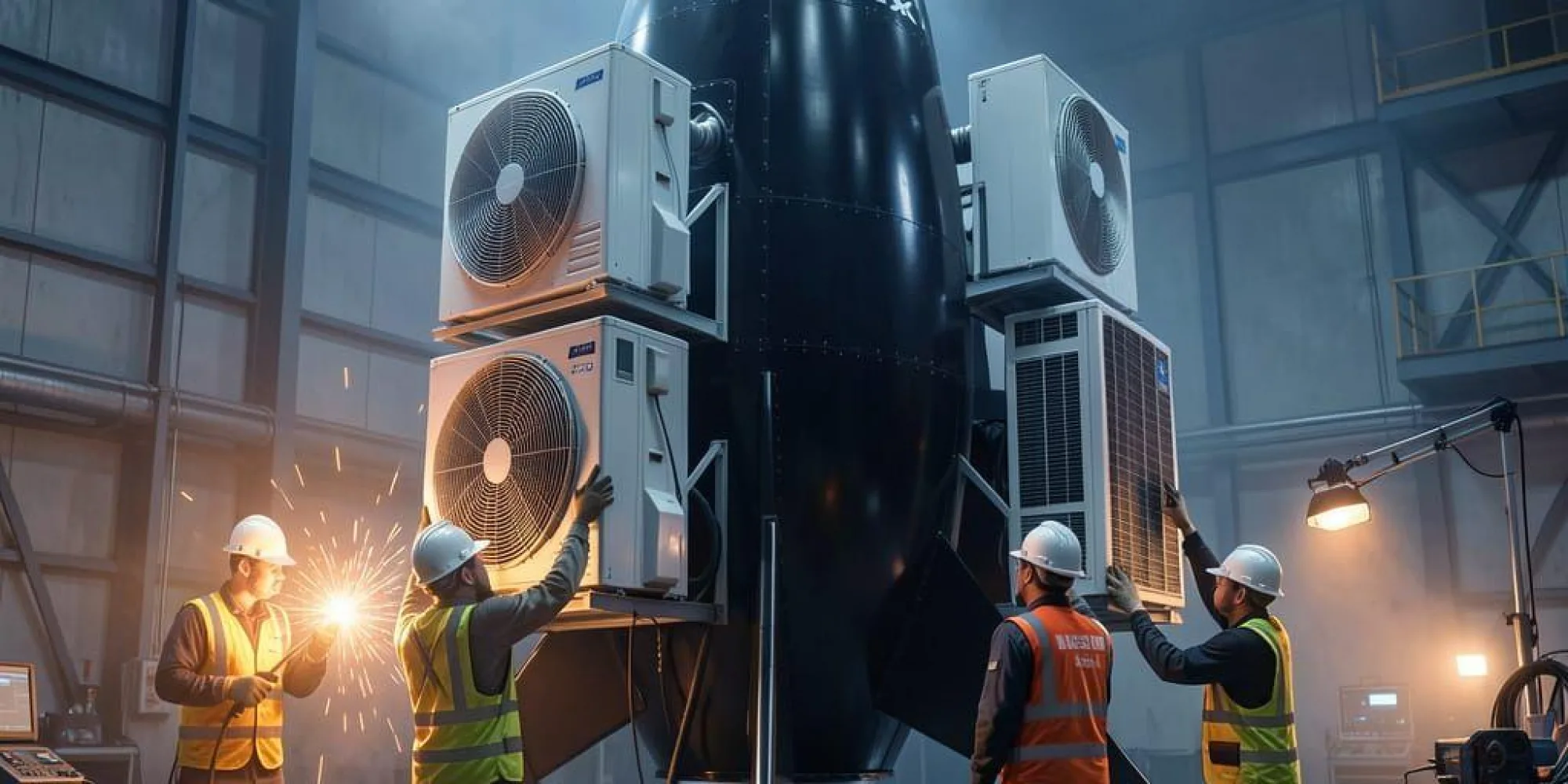
PLATFORM CHOOSER
MAKES DECISIONS ON WHICH AI PLATFORMS TO USE
The Platform Chooser decides which AI platforms will be used to build the solution. Once the problem has been properly framed, the next decision is to choose the environment in which the solution will be built. This is not a technical comparison exercise; it is a judgment call made under uncertainty. Every platform has constraints. Every platform has strengths and weaknesses. There is no complete picture available at the point of selection, and there never will be, because the environment moves too quickly for stability to exist.
The Platform Chooser understands this and makes the decision anyway. They do not wait for perfect information or complete certainty. They accept that the choice will be made with incomplete knowledge and that parts of what they choose today may not hold tomorrow. That is not a flaw in the process. It is the reality of operating at the frontier.
The decision is not about finding the ‘best’ AI platform. It is about selecting a platform sufficient to build the required solution now. That platform may be a primary environment such as Copilot, ChatGPT, Claude, or another core system, and around that core the Platform Chooser may bring in specialist AI services better suited to specific parts of the workflow. Some tools perform better at structuring information, others at generating content, others at integration or handling data. The system should be assembled from capability, not from brand loyalty.
At the point of selection, the Platform Chooser already knows that the platform will change, the model will change, performance will change, and integration points will shift. An AI solution developed in April may be irrelevant by December. Parts of it may also be significantly faster, more accurate, or more capable by December. Both outcomes are possible across different parts of the system. This is why platform choice is not a one-off decision but an ongoing commitment to operate inside a moving environment.
Because of this, sandboxing becomes the default mode of operation. The Platform Chooser does not rely on desktop research to determine whether a platform is suitable. Comparisons, reviews, and demos do not reveal real-world constraints, show how a system behaves under pressure, or expose failure modes, edge cases, or degradation in performance. Those realities only appear when the platform is used inside a working system.
The Platform Chooser learns through use. They build sandbox environments where real workflows, real inputs, and real outputs can be tested. They observe how the platform behaves, identify where it performs well and where it fails, and push it until it breaks. That is how real constraints are discovered; platform testing cannot be done in theory.
This requires a tolerance for imperfection. Some decisions will be wrong in hindsight. Some platforms will not perform as expected and some integrations will fail. Some solutions will need to be rebuilt. This is not a sign of poor judgment; it is a function of operating at the frontier.
Think of platform choice as exploration rather than selection. When moving into new territory, you do not have complete visibility. You have partial information and imperfect tools. You make a call, move forward, encounter resistance, adjust, and continue. Movement reveals the path. Standing still provides nothing.
The Platform Chooser selects a platform, builds within it, observes behaviour, and then decides whether to continue, extend, or shift. They are not locked into a decision, but they are also not paralysed by the possibility of change. Movement creates knowledge and knowledge informs the next decision.
The Platform Chooser is directly connected to the Pattern Revealer. Patterns of platform behaviour only become visible through repeated use. Where a platform performs consistently, where it degrades, where accuracy drops, where integration becomes unstable – these are patterns that emerge over time. The Platform Chooser uses those observations to make progressively better decisions.
The Platform Chooser also connects to the Noise Eliminator. The AI market produces a constant stream of announcements, comparisons, claims, and opinions. Most of it is noise. The Platform Chooser does not attempt to absorb all of it. They focus on what matters within the system they are building and prioritise its real behaviour over its reported capability.
The most important mode of the Platform Chooser is decisiveness. Indecision does not create learning, and waiting for clarity delays progress. The Platform Chooser makes the call, accepts the uncertainty, and moves forward knowing that adjustment is part of the process. They understand that no platform will carry the system cleanly from start to finish and that evolution is constant. Some decisions will need to be revisited. But the act of moving is what reveals the path. No amount of observation from the sidelines will tell you which platforms hold once you put them under load. The Platform Chooser makes the call, commits to a direction, and gets down to work in the AI sandbox.
Explore my full catalogue — music and books — on Spotify and Amazon.
On Spotify, search for:
Jason Bresnehan
Seventh Ribbon Music
Catholic Worship Songs JB
Christian Worship Songs JB
Christmas Holiday Songs JB
On Amazon, you can purchase my books:
A Catholic Gospel Journey Through the Lens of Alcohol Recovery — Jason Bresnehan
The AI Orchestration Engineer — Jason Bresnehan