
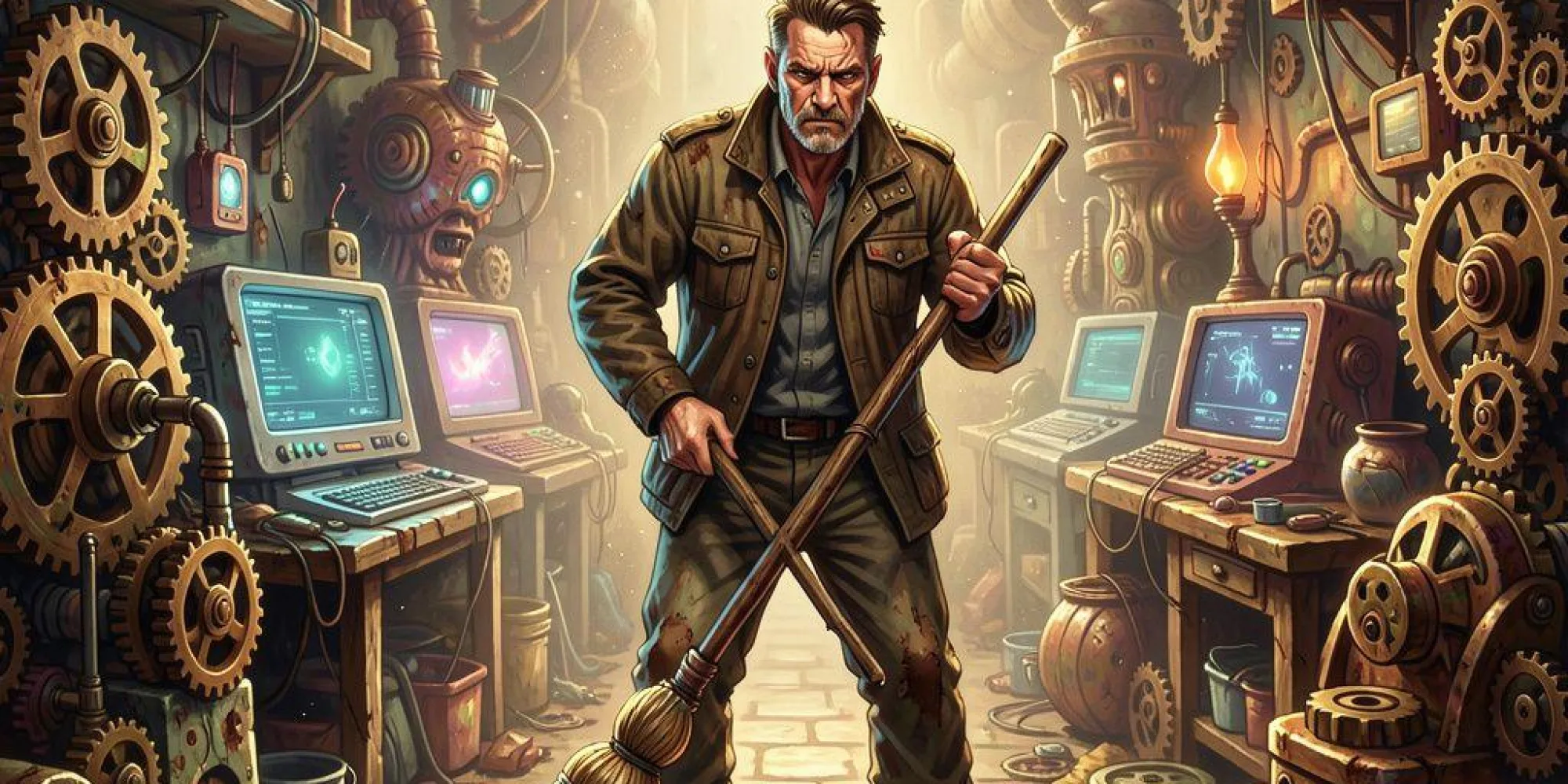
THE ENVIRONMENT SHAPER
DESIGNS CONDITIONS WHERE THE RIGHT BEHAVIOUR IS THE DEFAULT
Once the operator can stabilise systems and prevent drift, the next requirement is the ability to shape the environment itself. This mode ensures that the surrounding context supports clarity, velocity, and coherence rather than undermining them.
The Environment Shaper is the person who understands that performance is not simply a function of skill, effort, or intelligence. It is a function of environment. Systems thrive or fail based on the conditions in which they operate. Most people try to improve performance by pushing harder. The Environment Shaper improves performance by shaping the environment so that the desired behaviour becomes the natural behaviour.
This mode is essential because AI amplifies the environment. AI accelerates whatever conditions already exist. If the environment is chaotic, AI accelerates chaos. If the environment is unclear, AI accelerates confusion. If the environment is disciplined, AI accelerates discipline. The Environment Shaper ensures that the environment is designed to support high‑quality execution at speed.
This mode pairs naturally with the Entropy Controller. Entropy control prevents decay within the system, while environment shaping prevents decay around the system. Entropy control protects internal integrity, while environment shaping protects external stability. Together, they ensure that the system remains healthy even as it scales.
This mode pairs naturally with the Systems Conductor. The Systems Conductor aligns systems in time, ensuring they operate in rhythm and are ready for clean interaction, while the Environment Shaper aligns systems in space. The Systems Conductor ensures coordinated flow and readiness, while environment shaping ensures that the surrounding conditions support that coordination. This is why Environment Shapers often appear to ‘set the tone’ for an organisation. They shape the environment so that alignment becomes easier and misalignment becomes harder.
This mode explains why the Environment Shaper is disciplined about removing friction. They eliminate unnecessary approvals, redundant steps, outdated rules, and environmental noise. They design workflows that reduce cognitive load, and they create physical and digital spaces that support focus. They ensure that the environment does not fight the operator. They understand that friction is not a sign of effort; it is a sign of poor design.
The Environment Shaper is also a guardian of behavioural architecture. They understand that people respond to incentives, constraints, defaults, and cues. They design environments that encourage the right behaviours and discourage the wrong ones. They know that culture is not created by slogans. It is created by structure. Environment Shapers shape the environment so that the culture emerges naturally from the design.
This mode becomes even more important as AI accelerates execution. When systems move quickly, environmental flaws become structural failures. When workflows compress, environmental friction becomes a bottleneck. When AI generates outputs instantly, the operator must ensure that the environment can absorb those outputs without breaking. The Environment Shaper ensures that speed does not overwhelm the system.
The Environment Shaper is essential because organisations often assume that performance is a matter of individual effort. It is not. It is a matter of environmental design. In this environment, the person who can shape the environment becomes the person who can lead. They become the person who can create spaces where clarity, velocity, and coherence are the default. The Environment Shaper is not simply someone who improves systems. They are someone who designs the world those systems live in.
You know you’re an Environment Shaper when the easiest thing for people to do is the right thing.
On Amazon, you can purchase my books:
The AI Orchestration Engineer — Jason Bresnehan
A Catholic Gospel Journey Through the Lens of Alcohol Recovery — Jason Bresnehan