
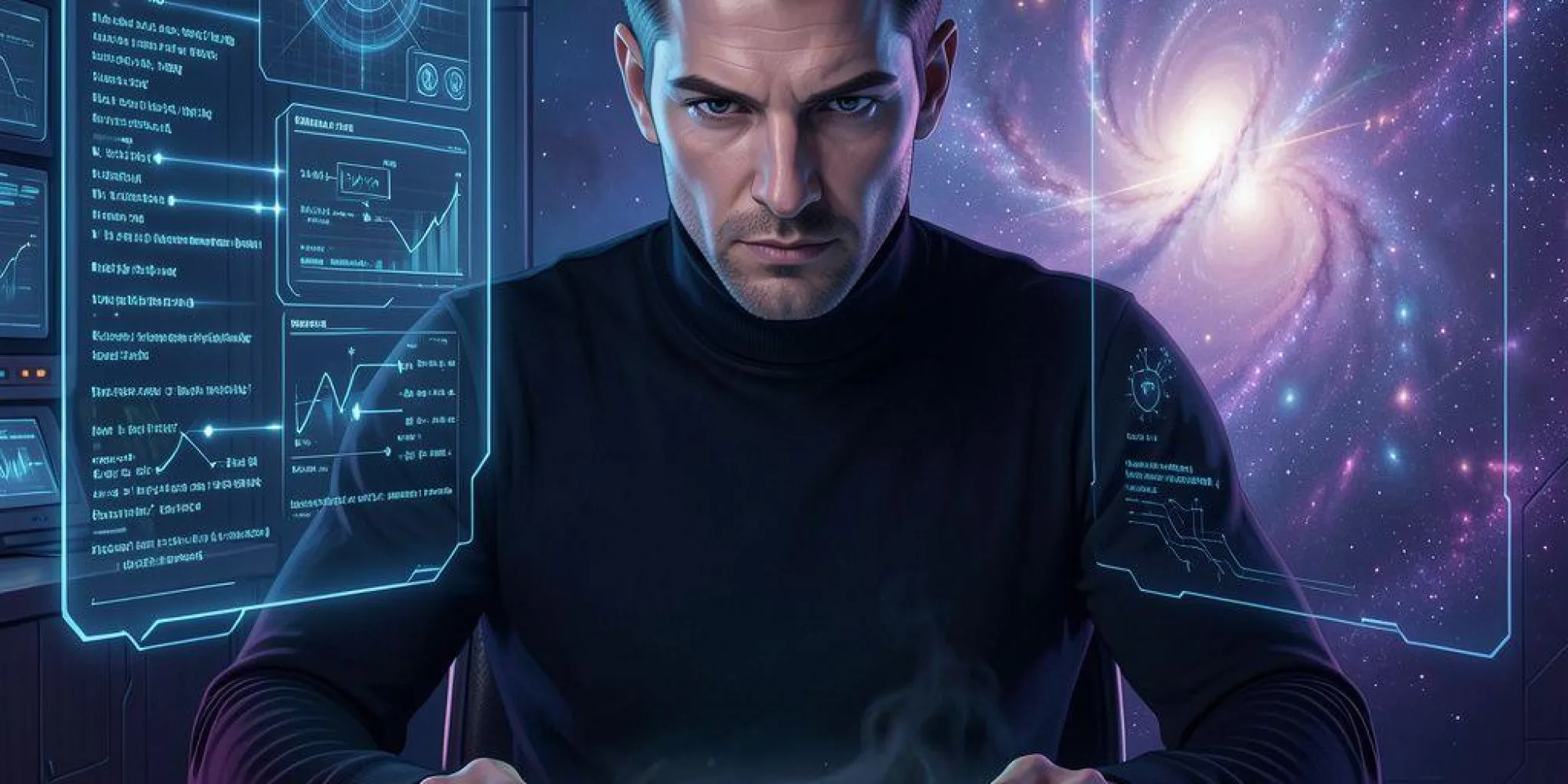
THE MULTI‑HORIZON THINKER
HOLDS ‘NOW’, ‘NEXT’, AND ‘LATER’ WITHOUT COLLAPSING THEM
Once cognitive load is under control, the next requirement is the ability to think across multiple time horizons without losing coherence. This mode allows the operator to act in the present while seeing the consequences that will unfold in the future.
The Multi‑Horizon Thinker is the person who can hold three timeframes simultaneously: what must happen now, next, and later. Most people collapse these horizons. They treat long‑term issues as urgent crises. They treat urgent issues as long‑term problems. And they confuse immediate tasks with strategic direction. The Multi‑Horizon Thinker does not collapse horizons; they separate them. They understand that each horizon has its own logic, its own risks, and its own tempo.
This mode is essential because AI accelerates the present. It compresses the immediate horizon and makes everything feel urgent. It produces outputs instantly, which tempts the operator to respond instantly. Without multi‑horizon thinking, the operator becomes reactive. They chase the present at the expense of the future, and they optimise for speed instead of trajectory. The Multi‑Horizon Thinker prevents this. They maintain strategic altitude even when the system is moving quickly.
This mode pairs naturally with the Cognitive Load Manager. Cognitive load management creates mental space, and multi‑horizon thinking fills that space with structure. Cognitive load management prevents overwhelm, while multi‑horizon thinking prevents drift. Together, they create a mind that is both clear and directional.
The Multi‑Horizon Thinker also connects directly to the Time Custodian. The Time Custodian protects the operator’s temporal integrity. The Multi‑Horizon Thinker uses that integrity to shape decisions across time, and the Time Custodian ensures the operator is not pulled into chaos. The Multi‑Horizon Thinker ensures the operator is not trapped in the present. This is why Multi‑Horizon Thinkers often appear calm in situations that make others frantic. They are not ignoring the present; they are contextualising it.
The Multi‑Horizon Thinker is rarely surprised, because they anticipate second‑order and third‑order effects. They see how today’s decision becomes tomorrow’s constraint and how a small misalignment now becomes a structural weakness later. They see how a short‑term optimisation can damage long‑term capability. They understand that every action has a temporal footprint.
The Multi‑Horizon Thinker is also a guardian of strategic coherence. Organisations often oscillate between short‑term panic and long‑term fantasy. They chase immediate fires and then swing to grand visions. They lack continuity. The Multi‑Horizon Thinker prevents this oscillation by ensuring that short‑term actions support long‑term direction and that long‑term direction is grounded in present reality. They create a system where each horizon reinforces the others.
This mode becomes even more important as AI accelerates execution. When systems move quickly, the present becomes overwhelming. When workflows compress, the future becomes invisible. When AI generates options instantly, the operator must choose which horizon each option belongs to. The Multi‑Horizon Thinker ensures that the operator does not sacrifice trajectory for speed or vision for immediacy.
The Multi‑Horizon Thinker is essential, because organisations are full of people who think about only one horizon. Some think only about today, some think only about tomorrow, and some think only about the distant future. In this environment, the person who can think across all horizons becomes the person who can lead. They become the person who can maintain coherence across time. The Multi‑Horizon Thinker is not simply someone who plans ahead; they are someone who integrates the present, the near future, and the long future into a single, coherent operating model.
On Amazon, you can purchase my books:
The AI Orchestration Engineer — Jason Bresnehan
A Catholic Gospel Journey Through the Lens of Alcohol Recovery — Jason Bresnehan